Ash Sheikh S.H.M.Faleel(Naleemi)
sheikhfaleel@gmail.com
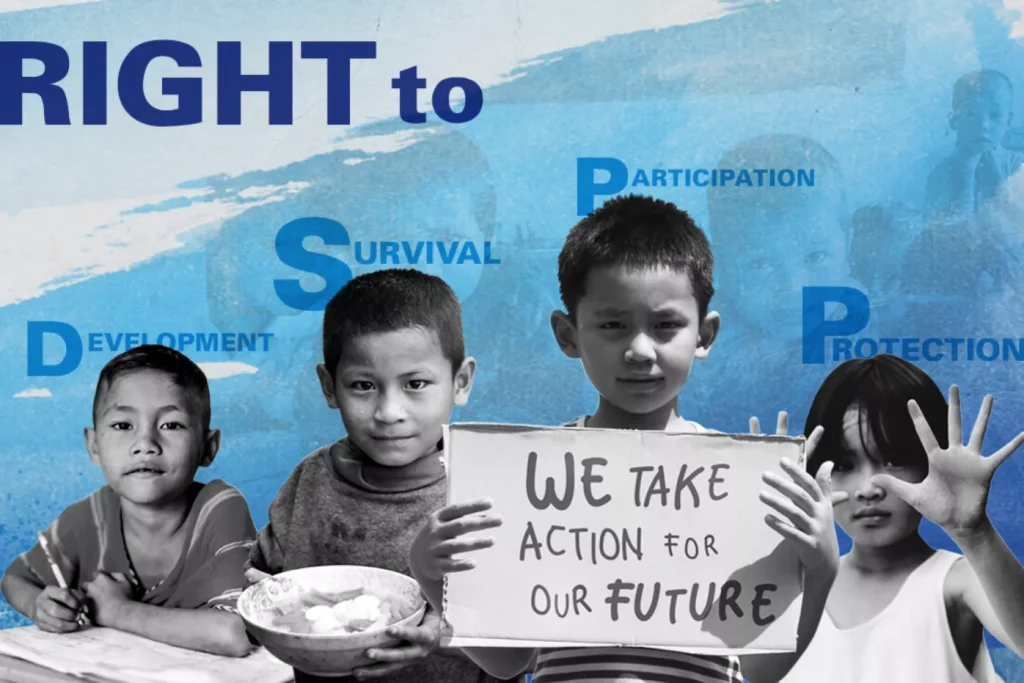
The matter of ‘children’ is undoubtedly one of the foremost items receiving universal attention these days. Exploitation, discrimination and violence against them urged its urgency to a great extent. Moreover, their inabilities, lack of experience, less opportunities to life’sprosperity, and special needs require special care from others. Thus, every global agenda for positive change and reform doesn’t ever fail to include the matter of children in its list. In this background, this article seeks to explain Islam’s stance on children, its comprehensive framework for their sustainable security, safety, and prosperity in brief.
Islam considers children to be of the benevolent blessings of the almighty Allah. Moreover, it entitles them to a great deal of rights, makes the proper upbringing of them a strict obligation on parents, and emphasizes on their care and special attention. The primary sources (Al Quran and As-Sunnah) provide very reasonable framework to ensure that children are properly nurtured.
1. Children are Allah’s creations:
“And Allah hasmade for you from yourselves mates and has made for you from your mates sons and grandchildren and has provided for you from the goodthings.” (Qur’an,: 16:72)
2. Allah considers the Children to be the Gifts for the Parents:
Children are no doubt a great gift from Almighty Allah to all parents. Parents must think of their children as such treasures that all the wealth and material resources are worthless as when compared to one’s children. “God’s alone is the dominion over the heavens and the earth. He creates whatever He wills: He bestows the gift of female offspring on whomever He wills, and the gift of male offspring on whomever He wills Or He mingles them, males and females, and He maketh barren whom He will. Lo! He is Knower, Powerful. (Qur’an: 42:49,50)
3. And the bondmen of (Allah)supplicate to grant them Children as the Comfortof eyes:
“And those who pray, “Our Lord, bestow upon us from our spouses and offspring’s comfort of the eyes, (Literally: the coolness (when) the eyes settle down) and make us an Imam(Leader) of the pious.” (Qur’an : 25:74)
4. Killing the children is foolishness:
In pre-Islamic times, the Arabs used to be disheartened and annoyed with the birth of girls, so that a father, the ‘buried female infant’ (of Jahiliyyaor Pre-Mohammed -SAW Arabia) has been uplifted with the ‘right of inheritance’, by Islam:
a) “When news is brought to one of them, of (the birth of) a female (child), his face darkens, and he is filled with inward grief! With shame does he hide himself from his people, because of the bad news he has had! Shall he retain it on (sufferance and) contempt, or bury it in the dust?” (Quran: 16: 58,59)
b) Through scathing locutions Almighty Allah restrained such a savagery, and admonished them “And when the girl-child that was buried alive is asked, for what sin she was slain!” (Quran: 81: 8,9)
c) “Losers indeed are those who killed their children foolishly, due to their lack of knowledge, and prohibited what God has provided for them, and followed innovations attributed to God. They have gone astray; they are not guided. [Quran: 6:140] “You shall not kill your children due to fear of poverty. We provide for them, as well as for you. Killing them is a gross offense.” (Quran17:31)
5. Abortion is prohibited; thus, every person is entitled to the Right to live – Once the child is conceived, he/she is protected by Allah’s laws which generally forbid abortion
a) Recognition of the need of abortion in certain cases where continuation of pregnancy is going to endanger the health or life of the expectant mother is permitted according to the medicine by the Islamic law also.
b) If a female commits a crime punished by the death penalty, then the fulfillment of the penalty is postponed according to the Islamic law until delivery and nursing of the baby for two years, or if a wet nurse is available for a much shorter period. This applies even if the pregnancy isillegitimate.
c) Similarly abortion will only be allowed if continuation of pregnancy is going to endanger the life or health of the expectant mother; or if there is proven serious congenital anomaly in the embryo or fetus. The performance of abortion should be done prior to 120 days from the start of conception, which is considered according to the Hadith (sayings) of the Prophet to be the time of enrolment. However, if the life of the expectant mother is endangered, and not only her health, abortion or pre-term delivery can be performed at any time of pregnancy to save her life. The decision of abortion should be agreed upon by three specialist physicians with clear medical indication.
6. killing of women and children in war is prohibited
It is not permissible to deliberately kill women and children in war, as per a great deal of well-known evidence, including the following:
a) A woman was
found slain during one of the campaigns of the Messenger of Allah (blessingsand peace of Allah be upon him), and the Messenger of Allah forbade the killing of women and children. (Sahih Al- Buhari (3015), Sahih Muslim (1744)
b) When the Messenger of Allah appointed commanders for an army or expedition, he would advise them personally to fear Allah, may He be exalted, and to be goodto those of the Muslims who were under their command. Then he said: “Fight ithe name of Allah, for the sake of Allah. Fight but do not steal from the war booty, do not break your promises, do not mutilate (the enemy dead) and do not kill children…” (Sahih Muslim -1731)
7. Maintainingthe children is the greatest Charity
To take care of children, providing them basic needs, such as food, garments, accommodation, education, security, medication, etc. are made compulsory obligations and considered to be the best of charities and the significant mean of entering the paradise on the day of judgement. Thus, it is also spiritually motivated.
a) Prophet Muhammad (peace be upon him) said: “You spent one Dinar for the fight for thesake of God, one Dinar to liberate a slave, one Dinar to a poor person, and one Dinar to support your family. The most rewarded Dinar is the one that you spenon your family.” (Sahih Muslim – 995)
b) “When you feed yourself, it is a charity. When you feed your children, it is a charity. When you feed your wife, it is a charity. When you feed your servant, it is a charity.” (Musnad Aḥmad 16727)
8. Special consideration for girls
Allah’s Messenger (PBUH) incited: ‘Whoever had a daughter born to him, and he did notbury her alive or humiliate her, and he did not prefer his son over her, Allahwill admit him to Paradise because of her.” (Musnad Ahmad- 1958)
Good children grow up in good atmosphere Every child is born pure. It is the environment created by his parents that determines his future. The home environment and the parent’s upbringing of the child either makes or mars the child’s future. If the home environment is Islamic, then the child will be religiously inclined. Manyparents complain that their children are ill-mannered, disobedient and disrespectful. The cause of their disobedience is only the fault of the parents, as they, on account of their greed for worldly things and love for money, kept their children blank in religious education. It is noteworthy that that the spiritual upbringing is far more important than the physical upbringing.
Duties of Parents
 Allah Almighty says: “O you who believe! ward off yourselves and your families against a fire (Hell) whose fuel is men and stones . . .” (Qur’an 66:6)
Islam expounds a marvelous system in every aspect of life. It emphasizes on the need for compatible care to children in terms of spiritual, physical, educational and moral upbringing in the best possible manner so that they facilitate the entry of their parent into paradise. Islam sees that if parents fulfill their duties towards their children in terms of providing them with necessary training, educational backing, moral, ethical and religions education it will definitely lead to a more caring child, a better family atmosphere and a better social environment and awareness. Then they will be like the sun, radiating light and hope. On the other hand, any negligence in those parental duties can lead to the loss of a child or ill-treatment of the parents at a later age.
In Islamic community, the family institution plays a pivotal role. Islam considers it to be a very significant tool to safeguard and ensure the wellbeing of children. Islam believes that strengthening of family institution is very important pre-requisite to ensure that children enjoy the rights they are entitled to, as broken families serves the main cause of making children devoid of those rights in modern times. The main purpose of marriage in Islamic communities was, and still is, procreation, which is an obligatory religious duty. The advent of a child is not only welcomed and considered to be a blessing, it is also regarded essential for strengthening the marriage bond, for the perpetuation of the line of descent, and for enlarging the community.
Islam considers children to be vulnerable and dependent beings. Therefore, Islamic law provides diverse rules for the protection of their body and property. According to these rules both parents have well-defined duties toward their children before they reach the age of maturity. In Islamic countries the patrilineal system of descent is the norm, so these duties are incumbent upon an established paternity resulting in mutual rights of INHERITANCE, guardianship, and maintenance. Any child born within wedlock is considered legitimate, and provisions have been made regarding paternity in cases of divorce or the death of the father. Due to the importance of patrilineal descent, adoption is not permitted in Islam (Qur’an XXXIII: 4–5), although before the advent of Islam it was practiced in Arabia. Muslims are enjoined to treat children of unknown origin as their brothers in the faith.
The father of a child should provide the mother with the necessary material for the child’s growth and survival. The baby has the right to food, clothing, and shelter (Qur’an II: 233). The father should also see to the child’s education (both secular and religious). Should the child’s father be dead or unable to provide for the child, and if the child does not have any inherited property, then providing for the child becomes first the duty of the paternal grandfather, then other paternal relatives, and finally any other living relatives.
The Prophet (SAW) said, “Every one of you is a shepherd and is responsible for his flock. The leader of people is a guardian and is responsible for his subjects. A man is the guardian of his family and he is responsible for them. A woman is the guardian of her husband’s home and his children and she is responsible for them. The servant of a man is a guardian of the property of his master and he is responsible for it. No doubt, every one of you is a shepherd and is responsible for his flock.” (Ṣaḥīḥ al-Bukhārī 6719, Ṣaḥīḥ Muslim 1829)
Rights of Children
Parents must fulfill their obligations towards their children. These are some of the main Duties of the parents. In other words, Rights of the Children.
- Rituals associated with the birth
There are various rituals associated with the birth of a child in Islam and it is the duty of the father or legal guardian to see the first of these dictates that:
a) When the child is born the Muslim call to prayer is whispered in both its ears.
b) The parents choose the child’s name,
c) On the seventh day after the birth a ceremony known as Aqiqa takes place, during which a sheep is slaughtered and the child’s hair is cut.
d) Female circumcision does not exist in the Qur’an and there is no solid evidence that the Prophet recommended it. In the Muslim areas where it is practiced, as in parts of northeastern Africa, it is the consequence of local pre-Islamic
- Breast Feeding
It is the responsibility of the mother to take care of the child during infancy. The mother must breast-feed the child at least up to the age of two “Mothers shall suckle their children for two years” (Quran 2: 233)
Although even in present-day Islamic countries breast-feeding usually continues as long as the mother has milk. If a mother is unable to nurse, it is permitted to employ a wet nurse who is in good health and of good character (it is believed by some jurists that traits are inherited through human lactation) (Qur’an II: 233, LIV: 6). If the family cannot afford a wet nurse, frequently a neighbor or a friend who has recently given birth may fulfill the role.If there is a dispute between parents, it is generally agreed that mothers have the right of custody for the first few years of a child’s life. If a mother dies, custody reverts to a female relative, preferably in the mother’s line.
- Inheritance
Children also have well-defined rights in respect to inheritance. Provisions have been made within the Qur’an and the Sharia for the inheritance rights of both female and male offspring. In pre-Islamic Arabia, women and children had no inheritance rights. There are also provisions for the inheritance rights of parents (see: Qur’an IV: 11, 12).
The child is also entitled to a guardian.This may be the father, or it may be someone the father appoints to protect the child’s property interests. Under Islamic law a child, as a minor, is not permitted to enter into any contractual arrangement. It is therefore the duty of the guardian to ascertain that any intended contract is to the child’s
advantage.
Parent-child relation is a reciprocal one. The Rights of Parents are the Duties of children. Now let us see what are
the Rights of Children (and Duties of Parents) in Islam. These can be summarized as under:
- Right to befed
Children have the right to be fed, clothed and protected till they grow up to adulthood. It is, primarily, the duty of the father to do that. Mother can provide help if necessary. Protection means protection against physical as well as moral and intellectual harm. Parents are duty bound to see that the child’s personality develops in all fields. So, if the parents have to resort to strictness for the sake of disciplining the children and protecting them from intellectually, morally and religiously undesirable behavior, children should not resent their strictness. Let them perform their duty as parents. Children’s duty is not to protest or berude but to listen and obey.

- Right for education
In Islam education is not limited to bookish knowledge but includes moral and religious training also. It means healthy all-round growth of child’s personality. Parents must not only provide for children’s education in schools and colleges but should also take personal interest in their studies, helping them if they can. This gives children a feeling of ‘working with the parents’ and encourages them in studies and of course, parents should not forget or neglect imparting religious/moral training to children. A little sacrifice on part of parents will save children from moral disasters. Effective moral training comes not from sermons, advice and precepts but from parents’ personal examples of good behavior. It is a famous Tradition of the Prophet (PBUH) that acquisition of knowledge is a must for every Muslim. Another Hadith lays stress on education of daughters. The Prophet (PBUH) once said, “He who provides good upbringing to 3 daughters shall go to Paradise”. A man asked, “what if one has only two daughters”. “He also shall go to Paradise”. Another man asked, “And what if one has only one daughter?” “He too”, replied the Prophet (PBUH).(Musnad Ahmad). Jabir ibn ‘Abdullah reported that the Messenger of Allah said, “Anyone who has three daughters and provides for them, clothes them and shows mercy to them will definitely enter the Garden.” A man from the people said, “And two daughters, Messenger of Allah?” He said, “And two.” Al-Adab Al-Mufrad 78, Hasan (Al-Albani)
- Right to love and affection
Children have many psychological needs also. Small children need to be loved, caressed, kissed and hugged. The Prophet loved children greatly. He would allow his grandsons Hassan and Hussain (R.A) to ride his shoulders even during his prayers. In streets he would offer ‘salaam’ to children, play and cut jokes with them. Sometimes he would even kiss small children in the street.From the types of mercy which can be shown to a child is kissing him
- a) ‘Aa’ishah said that a Bedouin man came to the Prophet(Sal)and said: “You (people) kiss the children and we do not kiss them.” So, the Prophet said, “Is there anything that I can do once Allah has removed mercy from your heart?” (Sahih Al-Bukhari 426/10)
- b) The Messenger of Allah kissed al-Hasan ibn ‘Ali, when al-Aqra ‘ibn Haabis al-Tameemi was sitting with him. al-Aqra‘ said: I have ten children and I have never kissed one of them. The Messenger of Allah (blessings and peace of Allah be upon him) looked at him, then he said: “The one who does not show mercy will not be shown mercy”. (Sahih al-Bukhari -5997)
- Right to bewell provided (materially)
Sa‘d ibn Abi Waqqas asked the Prophet (peace and salutations be upon him) whether he should give two-thirds of his property in charity after his death since he had much property and only a single daughter as heir. The Prophet PBUH allowed only one-third saying, “You may [give one-third], though one-third is also too much, for it is better for
you to leave your offspring wealthy than to leave them poor, asking others for help” (Bukhari & Muslim)
This means that parents should not spend all that they have on their own comforts and luxuries but must make provisions for children’s welfare after the parents die.
- Helping them to choose good friends
Parent should teach their children to choose good company and avoid bad ones because children are always influenced by the company they keep. More so, bad behavior can be easily transmitted through bad company. So, the Prophet (SAW) said, “Man is inclined to get influenced by his friend’s manners, so one must be careful in choosing friends”. (AbuDawud:4833, Tirmidhi: 2378)
- Equal Treatment – No Discrimination
An-Numan bin Bashir said that his fatherBashir bin Sa’d took him to Allah’s Messenger (peace be upon him) and said, “I have given this son of mine a slave.” The Prophet (peace be upon him) asked,‘Have you given all your sons the like?’ He replied in the negative. The Prophet (peace be upon Him) said, ‘Take back your gift then.’” (Bukhari, Gifts (12),Chapter: Giving gifts to one’s sons:2586 )
In another narration, the Noble Prophet (peace be upon him) said: “Be afraid of Allah, and be just to your children.” And in another narration, Prophet Muhammad (peace be upon him) said: “Make anyone else a witness upon this because I cannot be a witness on a Zulm (wrongdoing).” (Sahih Muslim: The Book of Gifts Chapter: It Is Disliked To Favor Some Of One’s Children Over Others In Gift-Giving: 1623)
In clear words, the Noble Prophet (peace be upon him) described preference of one’s child over the others as injustice which is synonymous with Zulm (wrongdoing) and Zulm is Haram (prohibited). However, we must not mix up between preference and making an exception of one child and satisfying his urgent needs; this exception serves special exigencies and runs in the same channel of supporting one’s family.
Abu Huraira reported that al-Aqra’ b. Habis saw Allah’s Apostle kissing Hasan (His grandson). He said: I have ten children, but I have never kissed any one of them, whereupon Allah’s Messenger said: “He who does not show mercy (towards his children), no mercy would be shown to him”. (Sahih Muslim: The Book of Virtues, Chapter: His Compassion Towards Children and His Humbleness, And the Virtue of That)
When parents fail to fulfill the duties assigned to them towards their children it generally results in the lack of care from children in their old ages. In some societies when their parents reach old age they no longer care for them. Instead in a cruel way, they place them in old age homes.
Finally, it can be firmly said that In the course of protecting children, caring them, ensuring their rights, nurturing them cultured, matured, and educated, and making them contributors for the betterment of the humanity as a whole, Islam stands as a very practical model among all the declarations made, frameworks set up, conventions and protocols agreed upon globally.
————————————————————————————————————————-
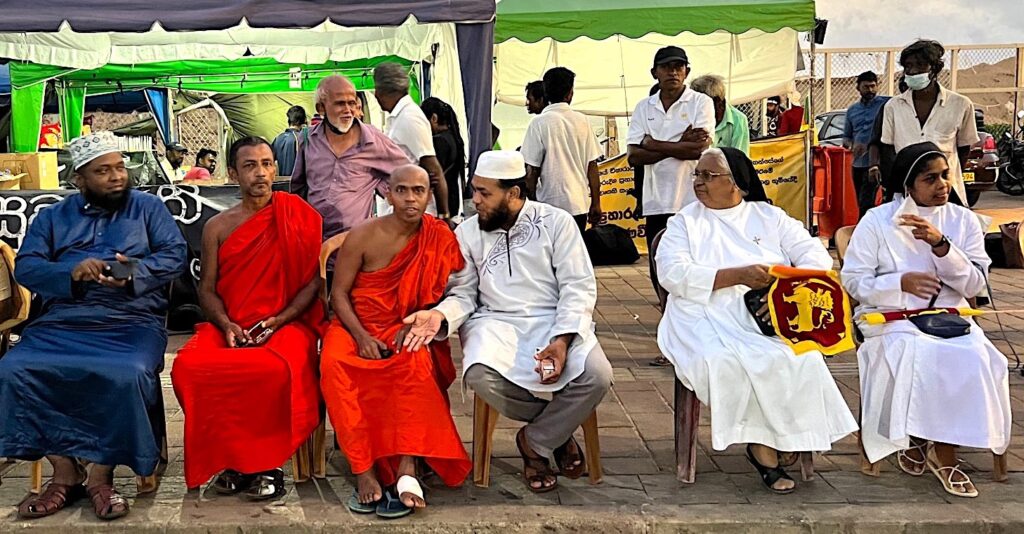
(Sheikh Faleel Participated as a panelist at a Roundtable discussion held on 23RD of August 2017 at Sarvodaya HQ.Presented this paper on CHILD RIGHTS AND PROTECTION AN ISLAMIC PERSPECTIVE.UNICEF,Walpola Rahula Institute,Sarvodaya and Arigatou international Geneva were core organizers.
Theme of the Roundtable Discussion was Strengthening Families to Foster Values and Nurture Spirituality in Early Childhood for the Prevention of Violence Against Children – The Role of Religious Communities.
The other speakers at the roundtable were: Most Ven. U. Dhammajiva Maha Thero, Former Bishop Rev. Duleep Kamil
De Chickera, Brahmachari Darshan, Chinmaya Mission;
UNICEF Country Representative, Mr. Tim Sutton, Dr. Vinya Ariyaratne, Secretary General Sarvodaya, and Dr. Hiranthi Wijemanne, National Child Protection Authority and Consultant/Advisor to the Ministry of Justice, National Child Protection Authority and the Ministry of Child Development and Women’s Empowerment in Sri Lanka.)